
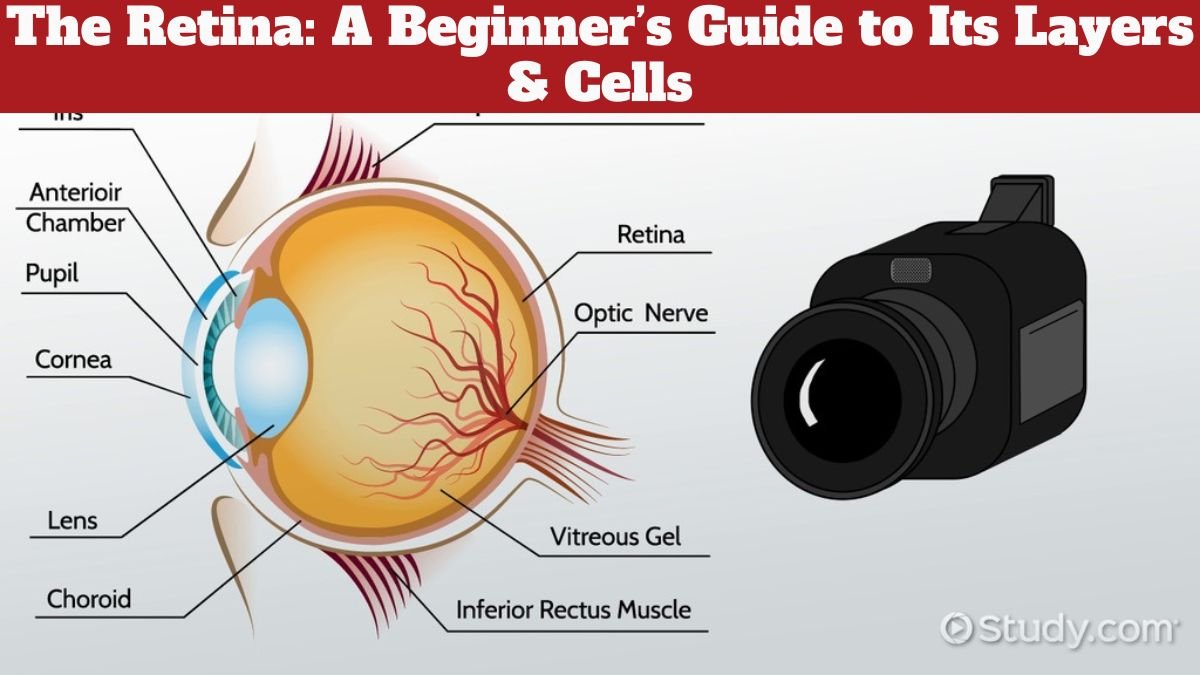
The structure of the human eye is as fascinating as it is complex. What we see, how we perceive light, how it is reflected, and how information is transmitted to the brain—all depend on a delicate and microscopic part of our eye called the retina.
The retina, located at the very back of the eye, is the foundation of our vision. It consists of numerous layers and cells that work together to make vision possible.
Let’s understand the retina in simple terms, with 10 key points in this quick review.
What is the retina? – A Simple Explanation
The retina is a thin, almost paper-like membrane located inside the eye. It acts as a light-sensing sensor, much like a camera sensor. When light enters the eye, the retina converts it into electrical signals and sends them to the brain. This process allows us to recognize the shape, color, and distance of objects.
The Basic Structure of the Retina – How Do the Layers Work?
The retina has a total of 10 layers, but for a beginner’s understanding, it can be thought of as a multi-layered smart system. Each layer has a distinct function—one layer captures light, another transmits that information to the brain. Together, they form a high-tech visual processing team, operating in a thousandth of a second.
Photoreceptor Cells – The Magic of Cones and Rods
The most important cells in the retina are rods and cones.
- Rods help us see in low light—walking at night, navigating fog, and more are possible.
- Cones recognize colors and fine details—green, yellow, blue, red… every color is recognized by cones.
If these two cells don’t function properly, it can be difficult to see at night or distinguish colors.
Ganglion Cells – They Transmit Signals to the Brain
Retinal processing doesn’t end with simply capturing light. Ganglion cells package these signals and convert them into a kind of electrical language. These signals reach the brain via the optic nerve. It wouldn’t be wrong to call them data delivery boys—because they carry the eye’s information to the brain.
Macula and Fovea – The Place of Sharpest and Clearest Vision
The macula is the most sensitive part of the retina, and at its center is the fovea.
This is where the clearest and sharpest vision is formed. You’re reading this article right now—the letters your eyes can see clearly are only because of the fovea.
This is why any problem with the macula can affect your ability to read, recognize faces, and perform small tasks.
Retinal Pigment Epithelium (RPE) – Protection and Support System
The RPE (Retinal Pigment Epithelium) is a vital layer of the retina.
Its function is to:
- Nourish cells
- Protect from harmful light
- Repair photoreceptors
- Remove old cells
It is considered the retina’s cleaning and maintenance team. If the RPE is affected, vision gradually deteriorates.
Nerve Fiber Layer – A Highway of Information
The retina’s Nerve Fiber Layer is the part where countless fibers come together to form the optic nerve. This layer handles information coming to the retina as a large network.
Eye diseases like glaucoma often damage this layer. Therefore, this layer is crucial for eye health.
Blood Supply – The Lifeline That Provides Energy to the Retina
The retina cannot function without a blood supply. It receives two different blood sources:
- From the choroid—which nourishes the photoreceptors
- From the central retinal artery—which supports the remaining layers
If any of these blood supplies are interrupted, vision can be suddenly lost. This is why diseases like diabetes pose a significant threat to the retina.
Retinal Diseases – Important to Know
The retina is as delicate as its structure, so it needs to be taken care of.
Some common diseases include:
- Retinal detachment—the retina dislocates from its original position
- Macular degeneration—the central vision gradually becomes blurred
- Diabetic retinopathy—damage to blood vessels due to diabetes
- Retinitis pigmentosa—a gradual loss of vision
Timely treatment is crucial, as retinal damage is often permanent.
Retina Care – Simple Steps for Healthy Vision
The retina requires regular care for optimal function. Here are some simple steps:
- Get regular eye exams
- Keep diabetes and blood pressure under control
- Wear UV-protective glasses
- Eat nutritious foods—such as vitamin A, lutein, and omega-3s
- Be mindful of screen time
If taken care of from the beginning, the retina can remain healthy for years, protecting your vision.
Conclusion – The Retina, the True Foundation of Our Vision
The eyes are the window to the world, but the retina is the screen that gives life to this window. Each layer and every cell of the retina has a unique function—from capturing light to intelligently transmitting it to the brain.
As a beginner’s guide, this article helps you understand that the retina is not just a part of the eye, but the center of the entire visual system.
