
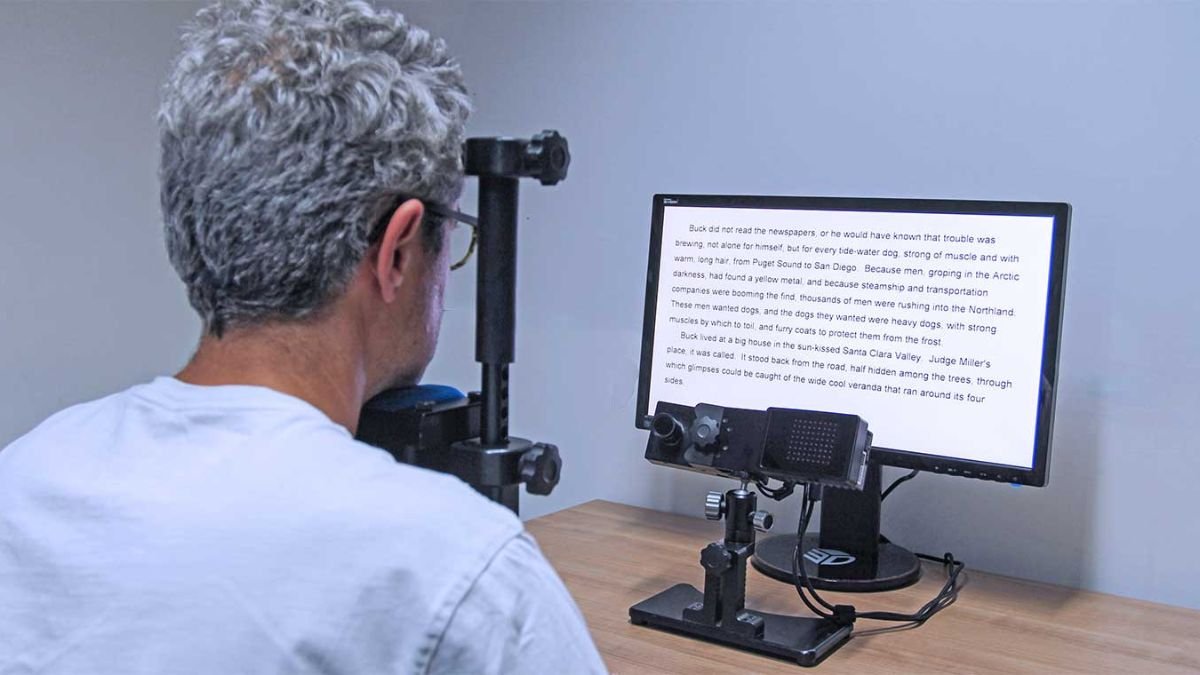
Eye-Tracking for Research: Eye-tracking is a technology that has been a major factor in changing the above-listed fields over time. Before, only large labs and researchers with high budgets had access to this technology, but now, thanks to low-cost setups, open-source software, and simple hardware, any researcher or student can make an eye-tracking system for their project. You can either make a low-cost DIY system or buy a cheap commercial device, and both options are available to you today. The article will go through the steps of creating a low-cost eye-tracker, setting it up, thinking about what, and how this technology offers precise data in such areas as UX.
DIY Webcam-Based Eye-Tracking Setup: Accurate Results on a Low Budget
Without an additional purchase of expensive equipment, and while only using a budget, you can put together an efficient eye-tracking system with the help of a regular webcam. The only things required are a webcam, some infrared diodes, and a simple frame or old eyeglass frame. It is a common practice among researchers to take an old eyeglass frame or small tripod and fix the webcam and IR LEDs on it so the camera can clearly record eye movements. There is also a method by which old photographic film is used instead of an infrared filter that greatly blocks the visible light and increases IR reflection, thus making eye movements more visible.
Once the hardware is in place, the next step is to install open-source software. Options like Open Eye, OpenFace, and GazeRecorder are currently popular in the research community because they are freely available for non-commercial use. After installation, you can use the software’s calibration tool to adjust the system to the participant’s eyes, screen height, and distance. The calibration process ensures that the system accurately matches the points on the screen to the participant’s gaze. The use of webcam-based systems has proven successful in many studies, especially when the research aims to understand basic gaze patterns, focus direction, and screen interaction.
Low-Cost Commercial Eye-Trackers: Easy Integration and High Reliability
If you prefer a ready-made and more accurate solution rather than a DIY solution, there are several companies on the market that offer low-cost screen-based eye-trackers. Models like the Tobii Pro Spark are popular with researchers because they capture eye movement at a sampling rate of 60 Hz, which is sufficient for UX studies, website testing, educational experiments, and basic cognitive science projects. These systems are plug-and-play, meaning you can get started immediately by simply installing the driver.
After purchasing a commercial eye-tracker, it’s necessary to update its driver and firmware, which the manufacturer provides through its software. The eye-tracker is then mounted under the monitor or screen so that it accurately captures the participant’s gaze, looking toward the center of the screen. During configuration, it’s important to ensure the system is set to the screen resolution so that eye position can be accurately mapped. Inexperienced researchers often overlook this step, but it’s the one that ensures accurate data.
Essential Preparations Before Designing an Eye-Tracking Study
One must have a research plan ready before starting any eye-tracking experiment. The very first thing is to figure out what behavior you want to measure – do you want to get a grasp of attention patterns on the screen, check out how attractive an advertisement is, or find ways of a website that users have difficulty with? Basically, UX professionals claim that proper study design is the key to getting better results.
After that, one should get the work done in preparing the stimuli or the visuals. These could be pictures, movies, website interfaces, or test screens. Trying to make your material as clean and bright as possible will bring no technical problems for the eye-tracking process.
The way people are positioned during a study is of great importance as well. Individuals during the experiment are placed at an arm’s length-distance—most likely between 60 and 75 cm—from the monitor, thus, comfortably. In order not to let the participants move their heads regularly, the monitor must be at the same level as their eyes. As a matter of fact, most up-to-date eye-tracking programs are equipped with features that check if a participant’s head is in a proper position and within the frame, NIH studies have pointed out.
Creating the Right Environment for Successful Eye-Tracking
It is not enough for researchers to only be device-oriented; hence, they forget the environment, which is just as necessary. Besides the data, lighting of the room, quality of the monitor, and refresh rate of the screen have an impact as well. In the opinion of the experts, eye-tracking is more accurate if a good-quality screen, especially one with a high refresh rate and high resolution, is used. Low-quality monitors may cause the users to see the ghosts of previous images or flicker, in this way, the recording of eye movements will not be accurate.
In addition, the study room should be quiet, unobstructed, and have controlled lighting. Excessive light or glare from the walls can affect infrared light, preventing the eye-tracking system from accurately detecting eye reflections. Therefore, it is always advisable to choose a stable, moderately lit room.
Mobile and VR-Based Eye-Tracking: Future Directions
Eye-tracking is not limited to screen-based studies today. Mobile eye-tracking, where participants can record eye movements while moving in the real world, is becoming increasingly popular. This technology is extremely useful for retail behavior, outdoor advertising, education, and real-world UX research. Some modern setups combine EEG, headsets, and infrared cameras to capture eye movements in fully dynamic environments. They do.
The use of eye-tracking in VR is also increasing. Experts believe that as VR technology advances, new research areas such as Distributed Cognition will emerge. This examines how individuals think, perceive, and respond to various stimuli in virtual environments.
Online and Webcam-Based Eye-Tracking: Big Opportunities at a Low Cost
Researchers are increasingly opting for fully online eye-tracking experiments. Participants utilize their laptops or tablets webcams to record their gaze movements. Some of the latest algorithms are capable of handling even low-quality webcam data and can locate gaze patterns with high precision. The technology has been found to cut down costs and at the same time, it is quite effective in reaching diverse populations and larger sample sizes, thus making the research more solid and feasible.
Conclusion: High-quality eye-tracking research possible at a low cost
Eye-tracking technology is now more affordable and accessible to the general public than it used to be. What was previously a task for well-equipped labs and specialized resources can now be accomplished through DIY webcam setups and inexpensive commercial devices, which are gradually attracting new researchers and UX professionals. With the right preparation, precise calibration, a stable environment, and suitable software even low-cost systems can generate very reliable data. Besides facilitating the understanding of users’ behavior, this technology allows for the implementation of deeper, data-driven decisions in such areas as digital experience, education, health, and marketing. The introduction of mobile, VR, and online eye-tracking is going to make this domain even bigger and more potent in the near future.
