
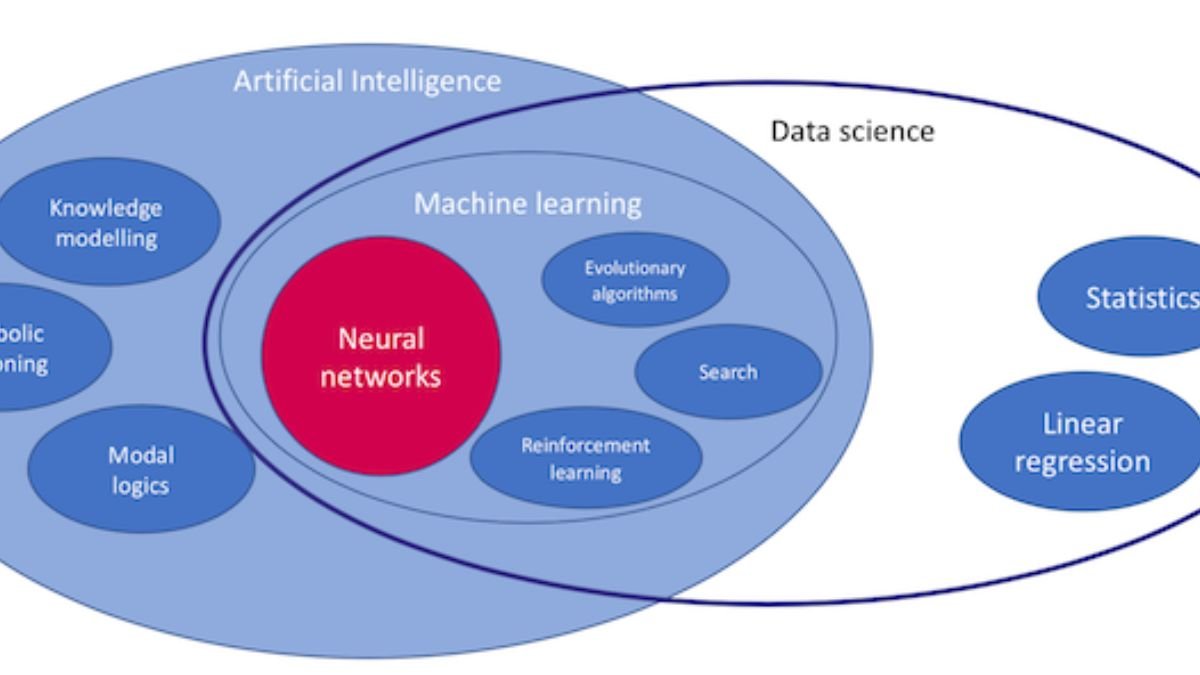
AI & Machine Learning in Neural Imaging: In the world of technology, artificial intelligence (AI) and machine learning (ML) have revolutionized health and medical research. Neural imaging, the technique for visualizing brain structure and function, has become more accurate and faster than ever before thanks to AI. AI and ML are being used to automatically analyze complex brain scans, improving disease diagnosis, treatment planning, and research. In this article, we will explore in detail how AI works in neural imaging, its technology, applications, challenges, and future prospects.
Introduction to AI in Neural Imaging
The goal of neural imaging is to identify brain structure, function, and any abnormalities. Traditional methods were time-consuming and relied on experts. AI and machine learning have automated this process. In particular, deep learning techniques and convolutional neural networks (CNNs) are used for pattern recognition, tumor and lesion detection, and precise segmentation of brain structures. As a result, diagnosis has become faster, more accurate, and more patient-specific.
AI’s Contribution to Disease Detection and Diagnosis
AI has become a vital tool for disease detection in neural imaging. It can automatically identify tumors, lesions, and other abnormalities. AI is also extremely helpful in detecting early-stage diseases like Alzheimer’s. Furthermore, the diagnosis of neurological conditions has become faster and more reliable with the help of AI. Doctors can now diagnose more patients, saving time, and begin treatment sooner.
Accuracy in Image Analysis and Measurement
AI-based algorithms can automatically segment brain structures. This helps measure volume, create high-resolution images, and obtain accurate results from low-dose scans. This allows researchers and doctors to analyze image data more efficiently and accurately. This not only saves time but also reduces the likelihood of manual errors.
Personalized Treatment
Every patient’s brain structure and disease state are unique. AI can analyze this data to identify which patients will respond better to a particular treatment. This makes treatment more personalized and targeted. For example, doctors can use AI to choose better drugs and therapies based on the type and size of the tumor.
Prognosis and Prediction
AI models can use brain imaging biomarkers to predict long-term outcomes and patient recovery. This is especially helpful in complex cases like brain injuries. With AI, doctors can anticipate potential complications and tailor treatment strategies.
Contribution to Research and New Discoveries
AI has also given a new direction to neurological research. By analyzing large data sets, it helps understand brain function, link activities to behavior, and identify potential disease mechanisms. Researchers can now view more data faster and more accurately than ever before, enabling new discoveries in the field of brain and neurology.
Automating Workflows
AI not only helps with image analysis, but can also automate the entire radiology workflow. Report generation, prioritization of cases such as stroke, and improved scheduling are all possible thanks to AI. This saves time and resources for both doctors and hospitals.
Key Technologies
Machine Learning
This is a subset of AI that has the ability to learn from data and improve its performance. It is used in processes such as clustering and regression.
Deep Learning
This is an advanced form of machine learning that uses deep neural networks to recognize complex patterns in large data sets.
Convolutional Neural Networks (CNNs)
This is particularly suitable for image processing. CNNs recognize features in images through the operation of various layers, helping with classification and recognition tasks.
Challenges and Considerations
- Algorithmic Bias
- AI models can amplify biases present in training data, leading to skewed outcomes.
- Data Privacy
- The use of large data sets raises questions about the privacy and security of patient data.
- Interpretability
- In clinical settings, it is essential to understand how an AI model arrived at a decision. This can be challenging with “black box” models.
- Data Quality and Validation
- High-quality data and robust validation on diverse populations are essential to ensure the accuracy of AI models.
Future Prospects
The use of AI and ML in neural imaging is rapidly increasing. As technology evolves, models will become more rapid, accurate, and patient-friendly. AI, combined with advanced techniques such as multi-modal and multi-photon imaging, will help make neurological diagnosis and treatment more personalized and effective. In the future, AI could open the door to new discoveries in brain science and neurology.
Conclusion
AI and machine learning have revolutionized the world of neural imaging. This is not limited to automating imaging, but also to disease diagnosis, treatment planning, research, and patient recovery.
