
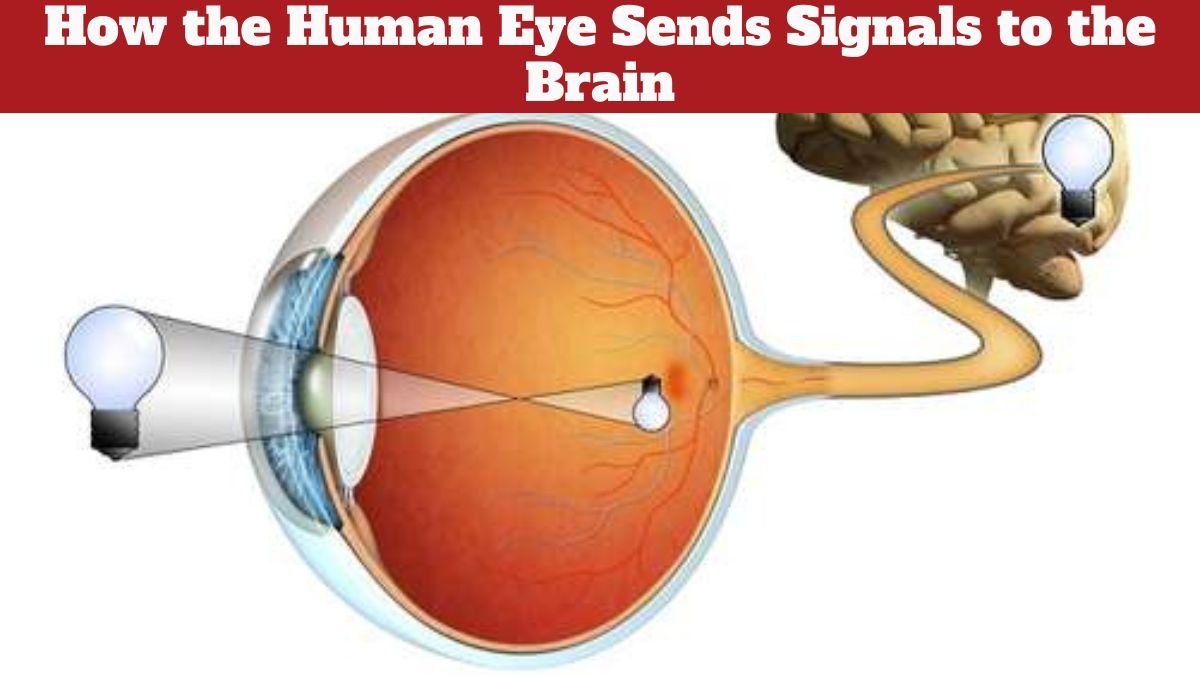
The human eye is not just a visual organ; it is a highly complex and amazing mechanism that guides our entire being. When we see something, our eyes and brain work together as a perfect team. The eye captures light, converts it into signals, and then transmits these signals to the brain, where the brain interprets them to form a clear image. This entire process involves not only scientific knowledge but also natural intelligence. Let’s understand how the eyes transmit messages to the brain in this quick review blog.
Light Entry Process – The First Step to Seeing
When an object is in front of our eyes, it reflects light. This light enters through the cornea, located at the front of our eyes. The cornea acts as a transparent shield, bending the light in the right direction and helping it reach the inner parts of the eye. The light then passes through the curtain-like pupil. The size of the pupil varies depending on the intensity of light—smaller in bright light and larger in dim light.
The Role of the Lens – The Amazing Job of Focusing Images
After passing through the pupil, light reaches the lens of the eye. Like a camera, the lens focuses the actual image of the object onto the retina. By changing its thickness, the lens helps make distant and nearby objects appear clearer. This ability is called accommodation. This is why the eye is often called a “natural camera.”
Retina – The Eye’s Detector Screen
The retina is the part of the eye where the entire image is formed in an inverted form. But this image is not a simple photo; it is converted into tiny signals of light. The retina contains two special types of cells—rods and cones.
Rods help us see in low light.
Cones are capable of recognizing colors.
Working together, we see clear, colorful, and vibrant scenes.
The Activity of Photoreceptors – From Light to Electrical Signal
When light falls on the retina, photoreceptor cells become active. These cells have the ability to convert light into fine electrical signals. Pigments within photoreceptors convert light energy into electrical energy. This is where the real journey begins—from the eye to the brain.
Optic Nerve – The Highway Between the Eye and the Brain
Electrical signals generated in the retina reach the brain through a thick nerve called the optic nerve. This nerve is the communication pathway connecting the eye and brain. You can think of it as a high-speed data cable, transmitting millions of messages to the brain every second. The optic nerve’s function is not only to transmit data but also to prevent it from going in the wrong direction.
Optic Chiasm – Where the Pathways of Both Eyes Meet
Before reaching the brain, the optic nerves from each eye meet at a point called the optic chiasm. Here, signals from both eyes cross, so that information from the left visual field goes to the right side of the brain and information from the right visual field goes to the left side. This is why our brain combines data from both eyes to create a perfect image.
Thalamus – The Control Center for Signals
After passing through the optic chiasm, signals reach a region of the brain called the thalamus. The thalamus is a kind of gatekeeper that decides which signals will be sent to which part of the brain. Here, signals undergo preliminary analysis and then proceed to the visual cortex.
Visual Cortex – The Seeing Part of the Brain
The visual cortex is the most important part of the brain where the actual process of seeing takes place. Here, signals from the eyes are combined, understood, and analyzed to create a clear, clear, and meaningful image. This region is located in the occipital lobe, at the back of the brain. It is from here that we perceive the object in front of us, its color, whether it is moving or stationary, and its distance.
Brain Interpretation – The Final Step to Understanding an Image
The brain creates an image and immediately connects it to our experiences, memories, and knowledge. For example, when you see a tree, the brain recognizes its shape, color, and texture and says, “This is a tree.” This means that the brain not only perceives but also understands. The brain processes all this so quickly that we don’t even realize that just a few milliseconds ago, only light was entering the eyes.
Eye-Brain Coordination – A Perfect Teamwork
The connection between the eye and brain isn’t limited to sending electrical signals. Both depend on each other. If the eye captures light correctly, the brain can form a clear image. And if the brain is strong, it helps the body respond better by understanding the signals from the eye. This coordination enables us to walk safely, read, drive, recognize faces, and do so many other things.
Conclusion: An Exciting Journey from Seeing to Understanding
The entire journey from the human eye to the brain is both fascinating and scientifically astonishing. This process, starting with light and extending to the photoreceptors, optic nerve, optic chiasm, thalamus, and visual cortex, is the foundation of our lives. This remarkable coordination between the eye and brain gives us the ability to see, understand, and feel the world.
